E
Self-Hosting Doesn’t Mean Owning a Server Rack
The rural self-hosting dream is real. The power and internet are not. Why VPS is the answer to the barn server problem.
Every business owner I talk to these days nods when I explain the benefits of self-hosting. Your data on your server. Your tools under your control. No monthly per-seat fees creeping up every year. No platform holding your customer data hostage. The appeal is obvious, and it’s real.
Then comes the question I hear every single time: “So I need to buy a server? Put it in my office?”
And I get it. There’s something satisfying about the idea of owning the physical machine. A rack in the corner, blinking lights, something tangible that represents your business infrastructure. Especially if you come from a background of building things with your hands — which I do.
But the honest answer is no. You don’t want to do that. Here’s why.
The Infrastructure Reality
Most small businesses and non-profits I work with are in rural areas. Beautiful places. Quiet. Affordable. The kind of setting that makes you want to own your own everything.
But beautiful rural settings come with two problems that don’t show up in the photos:
Inconsistent power. Storms knock lines down. Outages last hours — sometimes days. A UPS will get you through fifteen minutes, not an afternoon. And a generator strong enough to run a server rack 24/7 is a significant investment in fuel and maintenance.
Unreliable high-speed internet. This is the bigger one. A surprising percentage of homes and towns in rural America still can’t get consistent broadband. DSL from the phone company. Satellite with latency you can’t work around. Fixed wireless that drops when the weather changes. You can’t run a business server on a connection that goes down twice a week.
These aren’t edge cases. These are the daily reality for a huge portion of small business owners — the exact people who would benefit most from owning their infrastructure.
The Hardware Trap
Even if your power and internet were perfect, there’s a second problem: the hardware itself.
A decent server costs somewhere between $1,500 and $5,000. It runs well for about three to five years. Then the warranty expires, the components age out, and you start thinking about replacing it. Meanwhile, the technology moves forward — faster processors, more RAM, better storage — and your on-site hardware is stuck wherever it was the day you bought it.
You end up spending thousands every few years just to stay current. That’s not free. That’s not even cheap. It’s just a different kind of subscription — one where you also have to manage the hardware, monitor the drives, replace the failed components, and handle the backups yourself.
What a VPS Actually Does for You
A Virtual Private Server bridges the gap. You get the ownership and control of self-hosting — your data, your tools, your infrastructure — without the physical hardware problems.
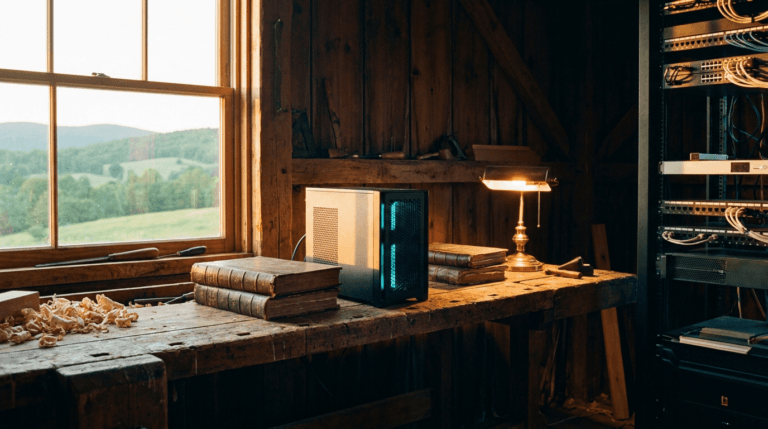
The server lives in a professional data center. Redundant power with battery backup and generators. Enterprise-grade internet connections with multiple providers. Climate-controlled environments where someone else monitors the hardware, replaces the failing drives, and keeps everything running.
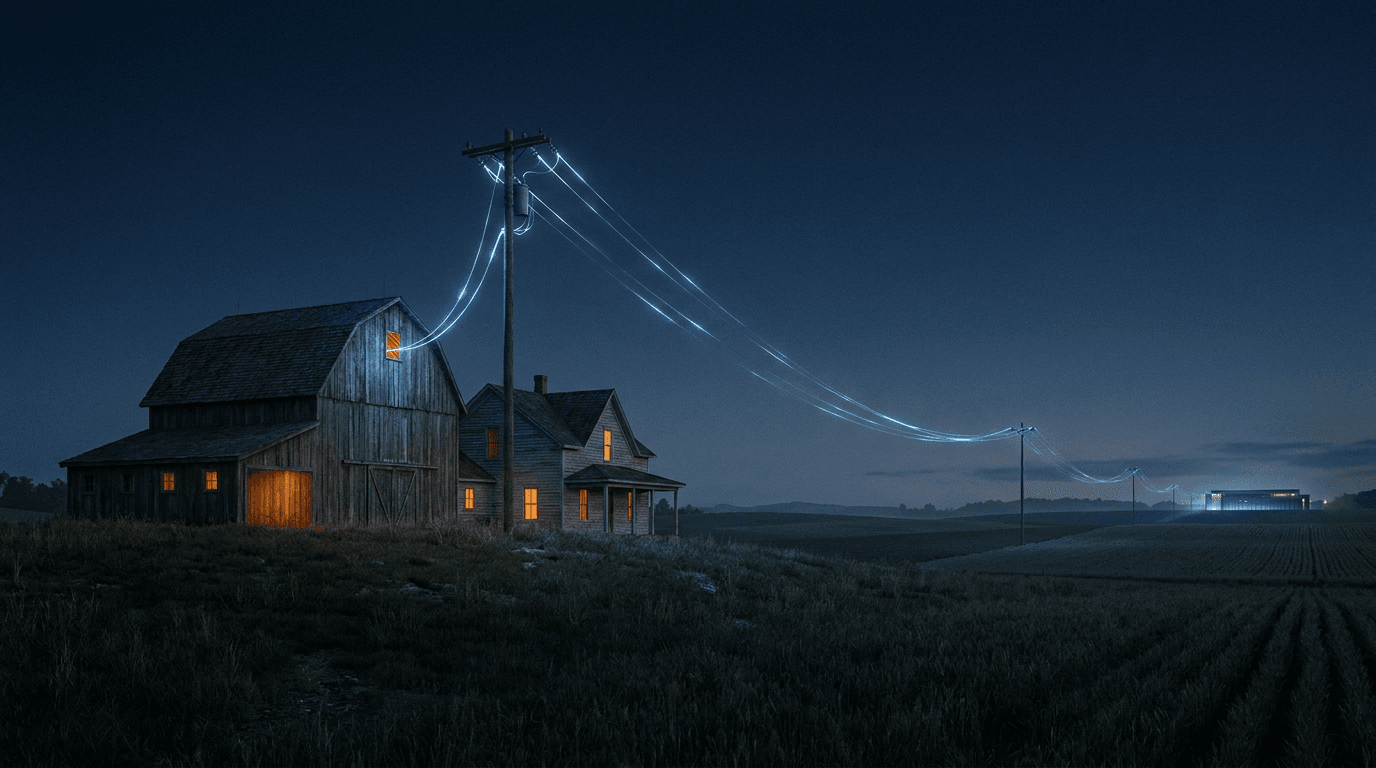
You access it from wherever you are — your barn workshop, your kitchen table, your local coffee shop. The connection between you and your server is encrypted. Your data never touches a third-party platform. It’s your machine. It just doesn’t live in your building.
And when the hardware ages out? The data center replaces it. You’re not buying a new server every three years. Your cost is predictable and manageable.
The Bridge
I love the idea of a server in a barn. There’s something honest about it. You buy the equipment, you rack it, you cable it, you maintain it. You own it completely. If you have the power, the internet, the space, and the willingness to manage hardware — it can work.
But most people I talk to don’t have all four. And the ones who do are usually better off spending their time running their business, not their server room.
Self-hosting is the goal. Owning the hardware is not the path. A VPS is the bridge between the dream and the reality — and it works from anywhere, even if your power flickers and your internet drops.